
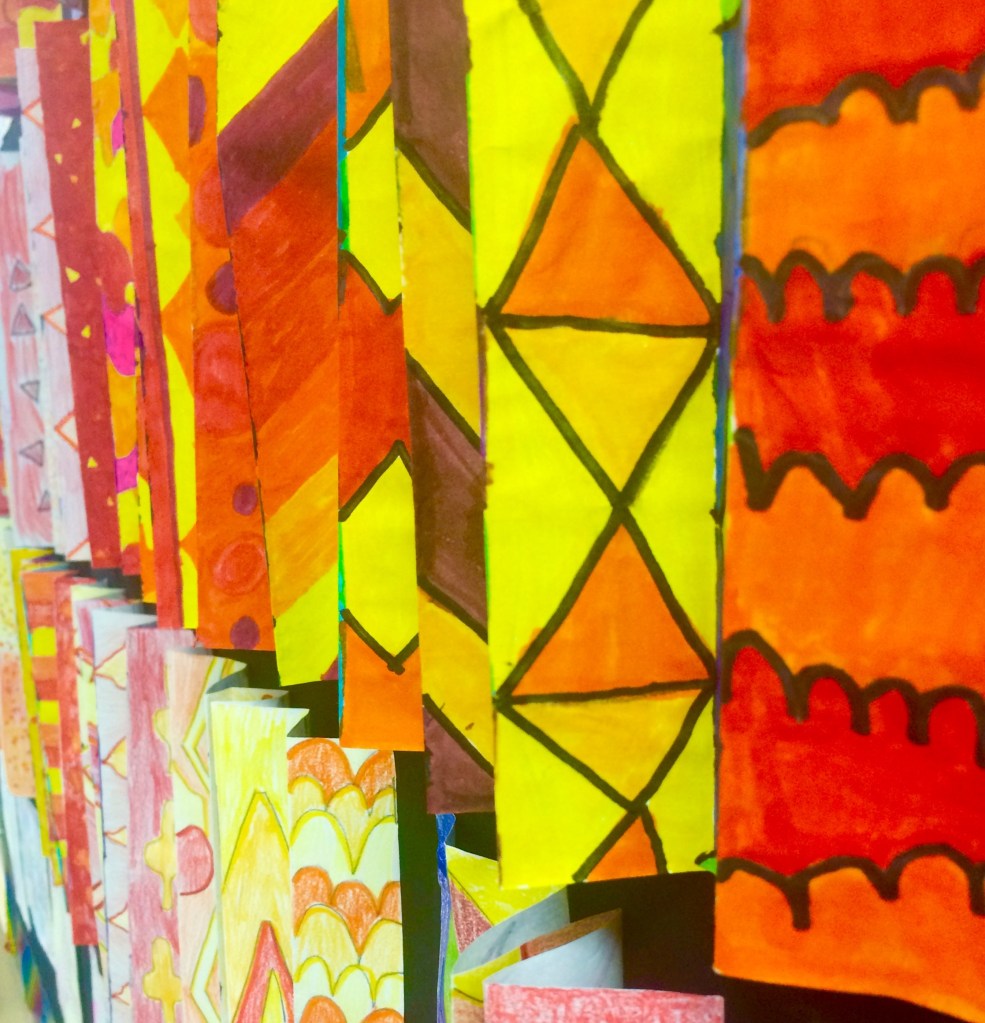
View of the bulletin board looking down the hall to the left. 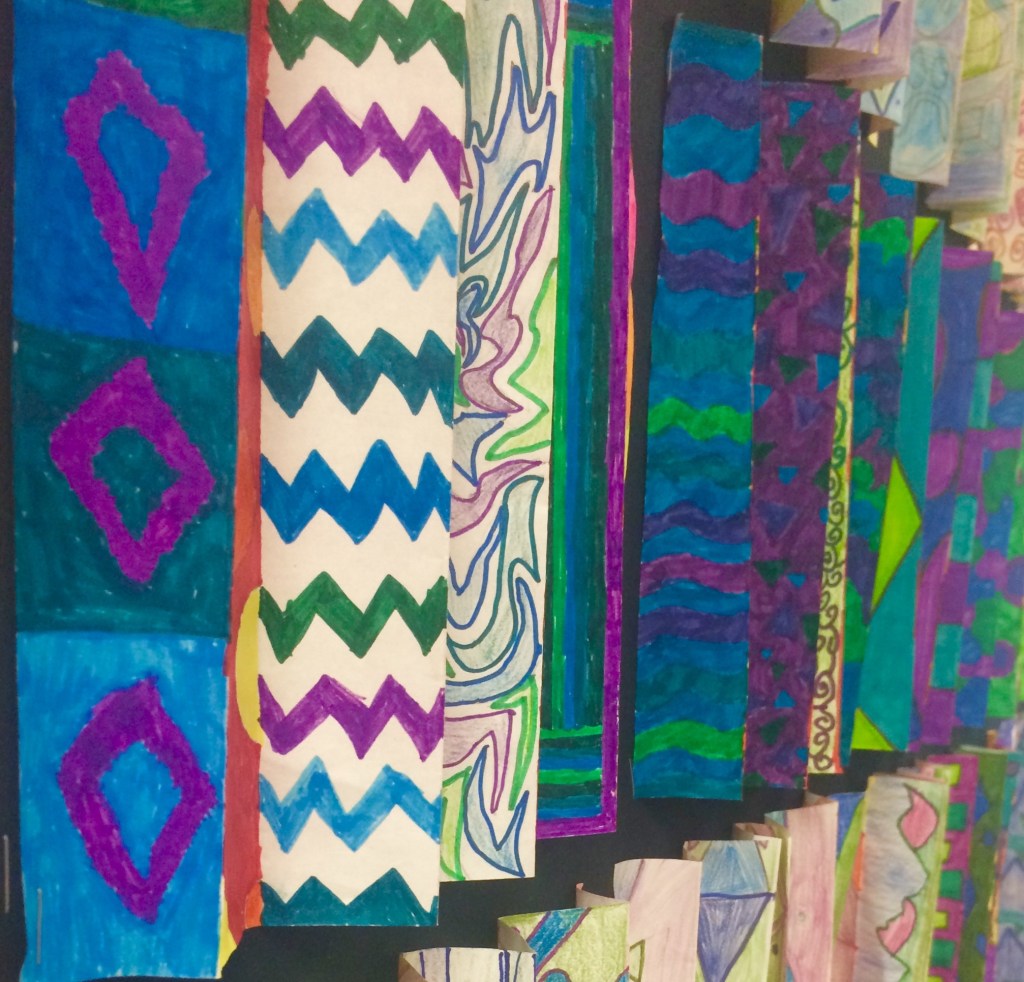
View of the same bulletin board looking down the hall to the right.
It’s so hard to capture just how cool these are. Agamaorgraphs are images that when viewed from different angles reveals a different image. This fairly simple lesson yields an interactive, beautiful and unique bulletin board. Let me explain.
Student Directions:
First, Students fold paper so that there are 8 panels. Next, ‘fan fold’ the paper. You know, panel to the back, panel to the front – just like making those paper fans. This can be difficult for some students. If you can demonstrate under the document projector. Then students draw patterns (not pictures-this is important) on each panel. Finally, students alternate colour palettes when they colour. Warm colour, cool colours, warm colours etc. I could also see doing primary and secondary colours or even tints and shades. I stuck with the warm and cool colours.
How to Create the Bulletin Board:
The real magic happens when you put them on the bulletin board. First, align all the art work so that they all begin with the same colour palette. For example, arrange them so the first panel on the left will be cool colours. This means that some student’s art may be “upside down” but since it was patterns students were instructed to draw on the panels, it will be fine to turn them ‘upside’ down. You won’t staple them flat onto your bulletin board, but with peaks and valleys. Fold against the board, staple, peak (fold away from the board), fold against the board, staple…you get the idea (see the images above). Do this for each child’s art. While this is time consuming it is totally worth when you and your students see the results.
Reveal to Your Students:
Once your done, have your students walk up and down close to the board. What they’ll see is all warm colours when walking in one direction and all cool colours when they walk in the opposite direction. I usually put up a sign directing those passing as to what the board is all about. I use this lesson as a bit of a review of the colour wheel and patterning. Once kids see this on the board they ‘get it’ and love to show their parents.
I hope that you will give this idea a try in your classroom!
 What Teachers Want