Thank you to all the amazing grade 3 teachers! This year, my students have become strong sentence writers. Although a few are still working on avoiding run-ons and fragments, most of my wonderful group is writing clear, well-formed sentences. So, it’s time to dive into paragraphs! This week, I’ll introduce the structure of a paragraph, and we’ll practice writing them together. But, as you know, this can get a little repetitive. That’s where paragraph puzzles come in!
The Benefits of Paragraph Puzzles in the Classroom
Paragraph puzzles are a hands-on, engaging activity that helps students improve reading comprehension, critical thinking, and writing organization. In this activity, students work together to arrange mixed-up sentences into a coherent paragraph. Here’s why paragraph puzzles are so effective:
- Boosts Reading Comprehension
By organizing sentences, students practice identifying main ideas, supporting details, and transitions, helping them understand how ideas connect in a paragraph. - Supports Kinesthetic Learners
Students move around the room, collaborating with classmates to find sentences that fit together. This physical element makes paragraph puzzles ideal for kinesthetic learners who thrive with movement and interactive activities. - Develops Organizational Skills
Paragraph puzzles teach students how paragraphs are structured—how topic sentences, supporting details, and conclusions come together to convey a complete thought. - Encourages Critical Thinking
Students evaluate sentence order and logical flow, enhancing their problem-solving skills and their ability to construct well-organized paragraphs. - Builds Vocabulary and Grammar Skills
As students work through the puzzles, they encounter new vocabulary and sentence structures, reinforcing grammar and the use of transition words.
Who Benefits from Paragraph Puzzles?
Paragraph puzzles are especially effective for grades 3-5, benefiting a variety of learners:
- Emerging Writers: They see clear examples of well-organized writing.
- Struggling Readers: These puzzles offer a structured, step-by-step approach to text comprehension.
- Kinesthetic Learners: The physical interaction of moving around and collaborating makes learning dynamic and engaging.
- English Language Learners (ELL): Students practice sentence structure, grammar, and paragraph organization in a fun and interactive way.
Solving Writing Challenges
For many students, organizing their thoughts into clear paragraphs is a challenge. Paragraph puzzles break this process down, helping students identify how sentences fit together logically. This boosts their confidence in writing and sharpens their ability to create well-structured paragraphs.
By incorporating paragraph puzzles into your lessons, you give students a fun, active way to develop essential literacy skills while engaging different types of learners, including those who benefit from movement and collaboration.
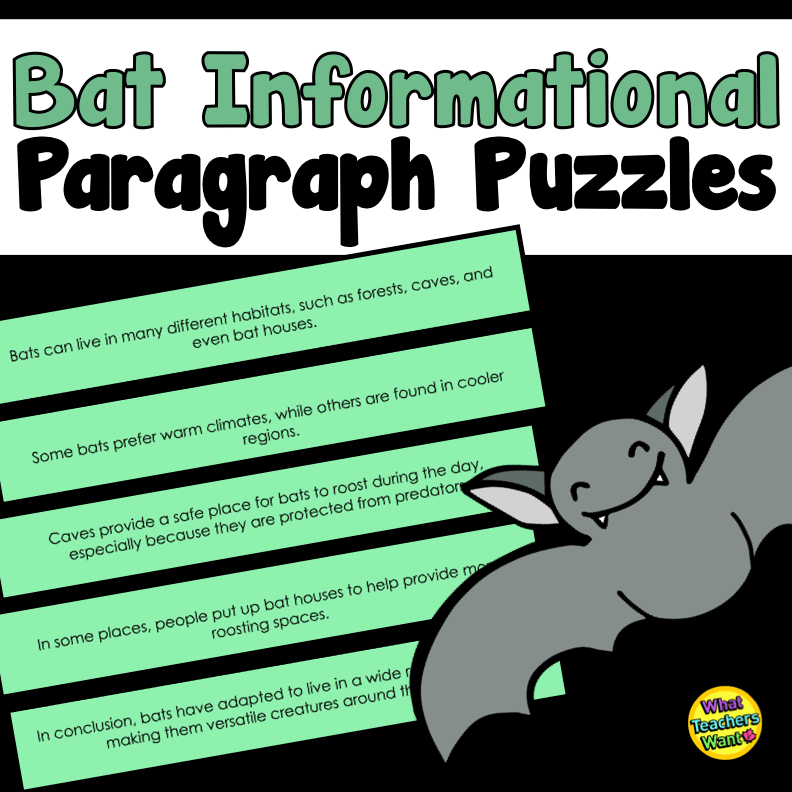
I made a new set focusing on bats to use in the month of October in my classroom. Click here for a link to the full product. Here is a free puzzle. Enjoy!
 What Teachers Want